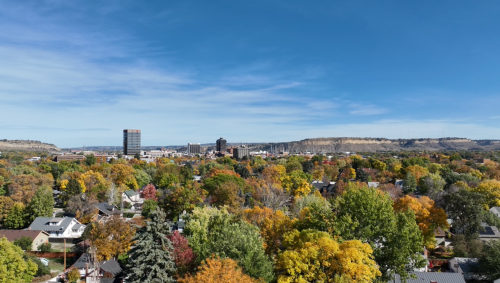
The Kairos Center lies in the heart of Billings’ Industrial District. Billings, Montana is often referred to as the “Magic City” because of its rapid growth and expansion. Our thriving city is known for its rich history, vibrant growth, and industrious roots. Let’s explore the journey that transformed Billings, Montana from a small railroad town into Montana’s largest city and a key industrial hub.
History of Billings, Montana:
Billings, Montana was founded in 1882 in conjunction with the westward expansion of the Northern Pacific Railway. The railroad, seeking to connect the Midwest with the Pacific coast, spurred the establishment of towns along its route to support its construction and operation. Billings was named after Frederick H. Billings, a financier and president of the Northern Pacific Railroad. The site chosen for the town was strategically located along the Yellowstone River, a prime spot for facilitating both trade and transportation.
The arrival of the railroad acted as a catalyst for Billings’ growth. Within a matter of months, what was once a barren stretch of prairie quickly became a bustling town. The town’s growth was swift, attracting settlers, ranchers, and entrepreneurs who recognized the economic potential of the region. The city’s initial boom was so dramatic that it soon outpaced many other towns in the region, earning its title as the “Magic City.”
Much of this explosive growth can be attributed to the city’s strategic location as a railroad hub. Billings became a critical junction for the transportation of goods and people, connecting the agriculture of the Yellowstone Valley with broader markets across the country. With access to major rail lines, Billings was perfectly positioned to grow at a time when railroad infrastructure was driving economic expansion across the American West.
Built on an Industrial Foundation:
Billings’ early prosperity was deeply rooted in its industrial base, particularly in agriculture, ranching, and energy production. As settlers arrived, they cultivated the rich lands around the Yellowstone River, leading to a booming agricultural industry. Wheat, barley, and sugar beets became vital crops, while cattle ranching also flourished, thanks to the vast open lands surrounding the city.
However, Billings’ industrial foundation extended beyond agriculture. The discovery of rich coal and oil reserves in the region propelled further growth. By the early 20th century, Billings had become a key center for energy production, with refineries and extraction industries setting up operations. This combination of agricultural and industrial solidified Billings’ place as a key economic driver for the state of Montana.
A Legacy of Growth and Innovation:
While the railroad may no longer be the primary driver of Billings’ economy, its legacy as a hub of growth and innovation continues. Today, Billings is not only Montana’s largest city but also a regional center for healthcare, education, oil, and finance. Its industries have diversified, with sectors like tourism, technology, and manufacturing contributing to the city’s vibrant economy.
Billings’ remarkable transformation from a frontier railroad town to a dynamic modern city is a testament to its adaptability and enduring spirit. The City continues to evolve, balancing its rich industrial history with forward-looking innovation.
Billings stands as a symbol of the power of infrastructure and industry to shape the destiny of a community. Its rapid rise and sustained growth make it a true “Magic City” — one that grew, almost miraculously, from the wide-open plains into a bustling hub of commerce and culture. You can own a piece of this incredible history. Click here to view our available condos and set up your private showing.